
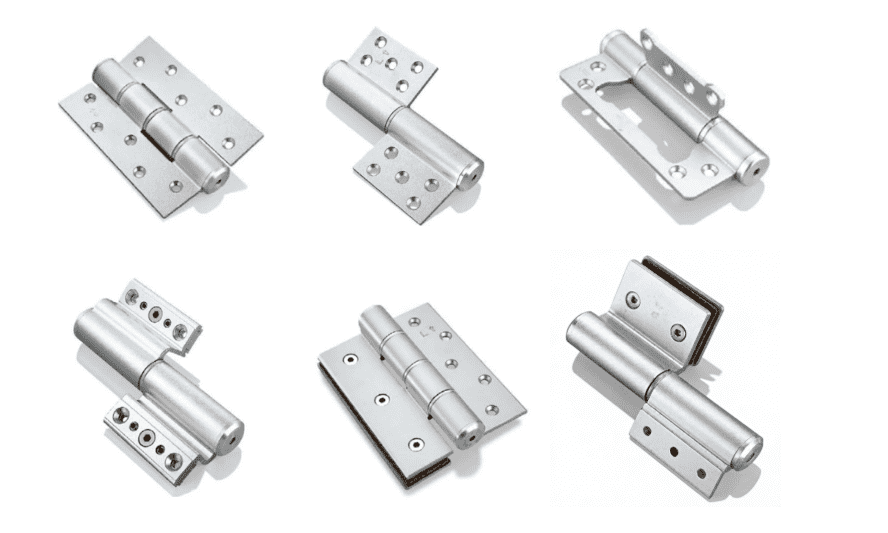
Real Case: Solving Hydraulic Hinge Oil Leakage for a Korean Client
One of the main reasons we wrote this guide comes from a real project with a client from South Korea, who is a decoration contractor specializing in interior doors.
In this project, the client was working with a double swing interior door, where each door leaf was designed to use two 5-inch hydraulic hinges, with each hinge supporting less than 30 kg.
Their goal was to replace traditional door closers with hydraulic hinges to achieve a cleaner appearance and smoother closing performance


Problem: Oil Leakage After Installation
However, after a period of use, the client reported oil leakage from the hydraulic hinges, which affected both performance and reliability.
Why Do Hydraulic Hinges Leak Oil?
Based on our engineering experience, oil leakage usually comes from:
- Insufficient sealing structure (poor gasket or seal design)
- Low-quality hydraulic oil that breaks down under pressure
- Unstable internal pressure system, causing oil escape over time
- Manufacturing precision issues, especially in compact hinge systems
In many low-cost products, these factors are often overlooked, leading to leakage after repeated use.
Our Solution
After understanding the door specifications and usage conditions, we recommended a high cost-performance hydraulic hinge model with:
- Reinforced multi-layer sealing system
- Stable hydraulic chamber design
- Tested durability over 100,000 cycles
We also provided sample hinges with English installation instructions for on-site testing.
Adjustment Question from Client
During evaluation, the client also asked an important technical question:
Is the closing speed and force adjusted together or separately?
The answer is: adjusted separately
- Top section: controls closing speed
- Bottom section: controls closing force (power)
This independent adjustment allows more precise control depending on door weight and usage frequency.
Result
After testing the samples, the client confirmed:
- No oil leakage
- Smooth and controlled closing
- Easy installation without external door closers
This successful test led to a smooth start of our cooperation.
Why Hydraulic Hinges Leak Oil (In Practice)
From what we’ve seen over the years, leakage is rarely caused by just one factor. It’s usually a combination of design and manufacturing issues:
- Weak or simplified sealing structure
- Hydraulic oil that can’t handle pressure over time
- Internal pressure not properly balanced
- Machining tolerances that are slightly off
On paper, many hinges look similar. Internally, they are not.
What We Recommended
After going through their door specs and usage conditions, we suggested a different model — not the most expensive one, but one with a more stable internal structure.
Key points were:
- Multi-layer sealing instead of single sealing
- More consistent hydraulic control
- Tested durability (over 100,000 cycles)
We sent samples with English instructions, so they could test everything directly on site.
A Detail That Often Gets Ignored: Adjustment
One of the questions they asked was actually very important:
“Are closing speed and force adjusted together?”
No — and they shouldn’t be.
On this type of hinge:
- The top section controls speed
- The bottom section controls closing force
This separation makes a big difference when you’re trying to fine-tune performance, especially for different door weights.
The Result
After testing the samples:
- No leakage
- Stable and smooth closing
- No need for additional door closers
That was enough for them to move forward with the project, and that’s how the cooperation started.
How to Choose the Right Hydraulic Hinge
If you’re selecting hinges for a project, here are a few practical points that matter more than most catalogs will tell you.
Match the hinge to the door weight
This sounds basic, but it’s often overlooked.
- Under 30 kg → standard models
- 30–60 kg → reinforced versions
- Above that → heavy-duty solutions
Pay attention to sealing, not just specs
Most problems (especially leakage) come from here.
Look for:
- Multi-layer sealing
- Pressure-resistant structure
Check if adjustment is independent
If speed and force can’t be adjusted separately, control will always be limited.
Don’t rely on price alone
Lower price often means compromises in internal components — which you won’t see until problems appear.
A Simple Takeaway
Hydraulic hinges are not complicated products, but small differences inside make a big impact over time.
If the sealing and internal structure are done right, the hinge will perform well.
If not, issues like leakage are only a matter of time.
If You’re Working on a Similar Project
If you’re dealing with similar door setups or considering replacing door closers with hydraulic hinges, feel free to share your specs.
UMAY can help you check:
- Door weight
- Hinge configuration
- Suitable models
And suggest options that are actually tested in real projects.
You can also explore our products and application cases on our website:
Share This Story, Choose Your Platform!