
Introduction
Choosing the right door lock standard is not a simple technical decision.
It is a commercial decision.
It affects door design, production cost, installation efficiency, certification, and long-term maintenance.
As a door hardware supplier serving global B2B buyers for over two decades, I have worked with door factories, regional lock brands, importers, and DIY retailers across Europe, the UK, North America, the Middle East, and Asia.
Mechanical door locks, handles, hinges, cylinders, door viewers, and door closers may look similar.
But the lock standard behind them makes a significant difference.
In this article, I will clearly explain the difference between Euro Standard locks, British Standard locks, and American Standard locks.
I will also share practical guidance on how procurement managers and product managers can choose the right lock system for their market.
Euro Standard vs British Standard vs American Standard: Key Differences
The three lock standards differ mainly in design philosophy, security certification, installation method, and market usage.
Euro Standard locks dominate continental Europe, the Middle East, and many international projects.
They are modular, flexible, and cost-efficient.
British Standard locks are heavily regulated.
They prioritize fire safety, insurance approval, and compliance with UK building codes.
American Standard locks focus on durability, convenience, and high-traffic usage.
They are common in residential, commercial, and hospitality projects in North America.
These standards also influence the choice of:
- Lock bodies
- Cylinders
- Lever handles
- Hinges
- Door closers
- Door viewers
Understanding the differences helps buyers avoid costly redesigns and compliance risks.
What Is a Euro Standard Lock?
Definition
A Euro Standard lock is typically based on a Euro profile cylinder combined with a mortise lock body.
It is designed for modular compatibility.
The Euro profile cylinder standard is defined under EN 1303.
Reference: https://standards.iteh.ai/catalog/standards/cen/4c2f3a2b-en-1303

Key Characteristics
- Separate lock body and cylinder
- Easy cylinder replacement without changing the lock
- Compatible with various door thicknesses
- Works with lever handles, escutcheons, and security roses
Euro locks are widely used with:
- Mechanical mortise locks
- Lever handles on rose or plate
- Multi-point locking systems
- Door hinges and closers for fire-rated doors
Advantages of Euro Standard Locks
High flexibility
Door manufacturers can use one lock body with different cylinders.
Cost efficiency
Mass production lowers unit cost for large projects.
Easy maintenance
End users can replace cylinders if keys are lost.
Wide market acceptance
Used across residential, commercial, and hospitality projects.
Strong compatibility
Works well with smart lock upgrades and access control systems.
Disadvantages of Euro Standard Locks
Cylinder attack risk
Basic cylinders may be vulnerable to snapping without protection.
Security depends on cylinder quality
Higher security requires anti-snap, anti-drill cylinders.
Reference: https://www.securedbydesign.com
Not fully compliant in the UK without certification
Some Euro locks require additional testing for UK fire doors.
What Is a British Standard Lock?
Definition
British Standard locks are governed by BSI (British Standards Institution) specifications.
The most recognized certification is BS 3621 for thief-resistant locks.
Key Characteristics

- Often combined lock and latch mechanisms
- Designed specifically for UK timber and composite doors
- Insurance-approved and police-recommended
- Tested for fire resistance and durability
British Standard locks are commonly used with
- British mortise lock bodies
- Lever handles with backplates
- Fire-rated hinges and door closers
Advantages of British Standard Locks
Insurance compliance
Many UK insurers require BS 3621 certified locks.
High security testing
Resistant to drilling, picking, and force attacks.
Fire safety assurance
Compatible with fire door regulations.
Reference: https://www.gov.uk/fire-safety
Strong market trust
Recognized by architects, builders, and homeowners.
Disadvantages of British Standard Locks
Higher cost
Certification and testing increase manufacturing cost.
Limited design flexibility
Fewer variations compared to Euro systems.
Market-specific
Less suitable for export outside the UK.
What Is an American Standard Lock?
Definition
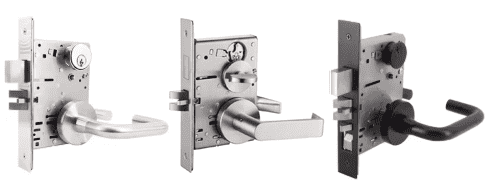
American Standard locks follow ANSI/BHMA grading systems.
The most common standards are ANSI Grade 1, 2, and 3.
Key Characteristics
- Cylindrical or tubular lock design
- Integrated latch and lock mechanism
- Heavy-duty construction
- Designed for high-traffic usage
American locks are frequently paired with
- Lever handles or knobs
- Commercial door hinges
- Automatic door closers
- ADA-compliant hardware
Advantages of American Standard Locks
High durability
Ideal for schools, hospitals, hotels, and offices.
Clear grading system
Buyers easily understand performance levels.
Fast installation
Minimal door preparation required.
Strong presence in commercial projects
Preferred by contractors and facility managers.
Disadvantages of American Standard Locks
Less modular
Replacing components often requires replacing the entire lock.
Limited design options
Compared to Euro lever handle systems.
Higher shipping cost
Heavier construction increases logistics cost.
How Should Buyers Choose the Right Lock Body?
From a procurement perspective, the decision should be market-driven.
Choose Euro Standard locks if:
- You sell to multiple countries
- You need flexibility in door design
- You want compatibility with lever handles and cylinders
Choose British Standard locks if:
- You sell mainly in the UK
- Insurance compliance is mandatory
- Fire door certification is required
Choose American Standard locks if:
- You focus on North America
- Your project involves high traffic
- Durability and ADA compliance are priorities
In large projects, buyers often source:
- Lock bodies
- Lever handles
- Hinges
- Door viewers
- Door closers
From one supplier to ensure consistency and cost control.
Conclusion
There is no universal “best” lock standard.
There is only the right standard for the right market.
Euro locks offer flexibility and global compatibility.
British Standard locks deliver certified security and compliance.
American Standard locks provide durability and performance.
For door manufacturers, importers, and hardware brands, understanding these differences reduces risk and improves long-term profitability.
As a professional door hardware supplier, I always recommend choosing lock systems based on market regulation, end-user expectations, and total lifecycle cost—not just unit price.
The right lock is not just hardware.
It is a strategic product decision.
Share This Story, Choose Your Platform!