
Introduction
Choosing the right door handle is more important than most people think.A handle is the first part of the door people touch.It shapes the user experience instantly.
For more than 20 years, we have worked with door factories, regional brands, importers, and building-material retail chains across the world.
The buyers usually ask me the same question:
“Should we choose a split handle or a plate handle for our next project?”


This is not a small decision.The handle style affects installation speed, door compatibility, durability, aesthetics, and even your long-term maintenance cost.According to global door-hardware industry data, handles are among the most influential components in overall door performance and customer satisfaction(Source: Global Door Handles Market Report – https://www.grandviewresearch.com/industry-analysis/door-handles-market).
1. What Is a Split Handle?
A split handle (also called a lever handle set) consists of two separate levers, one on each side of the door.
It is typically paired with a mechanical mortise lock.

We supply a full range of split handles compatible with European, Brazilian, Middle Eastern, and Southeast Asian markets.
Key Features
- Sleek and modern
- Flexible combinations with our mechanical door locks
- Easy replacement without touching the lock body
- Large variety of finishes (black, satin nickel, chrome, antique bronze)
Where It Works Best
- Interior wooden doors
- Apartment units
- Modern homes
- Doors requiring advanced lock compatibility
A Quick Guide to Split Handles: Materials, Colors, Styles, and Rosettes
Split handles—also known as lever-on-rose handles—have become a favorite for modern door manufacturers and hardware buyers. They offer clean lines, flexible design choices, and easy installation. Below is a simple breakdown of the four factors that matter most when selecting split handles: materials, colors, styles, and rosettes.
1.1 Materials: Strength Meets Aesthetics
Split handles come in many materials, each designed for different project needs.
Stainless steel is the most common. It offers excellent corrosion resistance and long-term durability, ideal for high-traffic doors.
Aluminum alloy is lightweight and cost-efficient, often used for interior rooms or value-engineered projects.
Zinc alloy provides the best molding freedom. It allows designers to create detailed handle shapes while keeping costs reasonable.
Brass offers premium performance and a solid feel. It is a top choice for hotels and luxury homes where tactile quality matters.
Choosing the right material helps balance cost, durability, and design freedom.

1.2 Colors: Matching Any Door Environment
Color options for split handles have expanded dramatically in recent years.Popular finishes include Satin Nickel, Chrome, Matte Black, Gold, Copper, and Graphite.Matte Black continues to lead contemporary projects because it pairs well with minimalist interiors. Satin Nickel remains the safe choice for mass-market residential doors.Advanced coating technologies—such as PVD—ensure colors stay bright and scratch-resistant, making split handles suitable for both residential and commercial spaces.

1.3 Styles: From Classic to Ultra-Modern
Split handles offer a wide variety of styles.
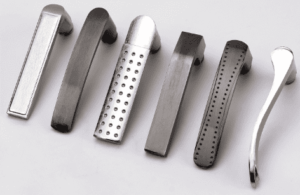
You can choose straight levers for a clean, architectural look, or curved levers for a softer, more ergonomic feel.
Minimalist square levers work well in industrial or modern designs.
Traditional round or wave-shaped levers suit classic interior themes.
Because the handle and rose are separate, designers can mix and match components to create unique styles for different door series.
1.4 Rosettes: Small Details, Big Impact
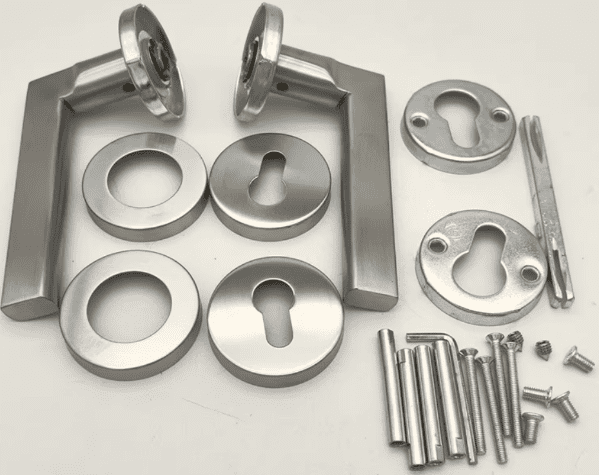
The “rosette” is the small circular or square plate that sits behind the lever.
Round rosettes deliver a timeless, low-profile look.
Square rosettes provide a sharper, modern edge.
Oversized roses help cover old installation holes during renovation projects.

Different functional configurations—plain rose, keyhole, privacy, or thumb-turn—allow one handle series to fit bedrooms, bathrooms, and entrance doors consistently.
The rose determines not only the final appearance but also the ease of installation and compatibility with mechanical locks.
1.5 Conclusion
Split handles offer rich choices in materials, colors, styles, and roses, making them one of the most versatile door handle solutions in the hardware market. Whether you are a door manufacturer, a regional hardware brand, or a building materials distributor, the flexibility of split handles helps you customize door collections while controlling cost and maintaining brand consistency.
3. What Is a Plate Handle?
A plate handle integrates the lever and the backplate into one structure.
In many markets, buyers call it a “long plate handle” or “panel handle.”
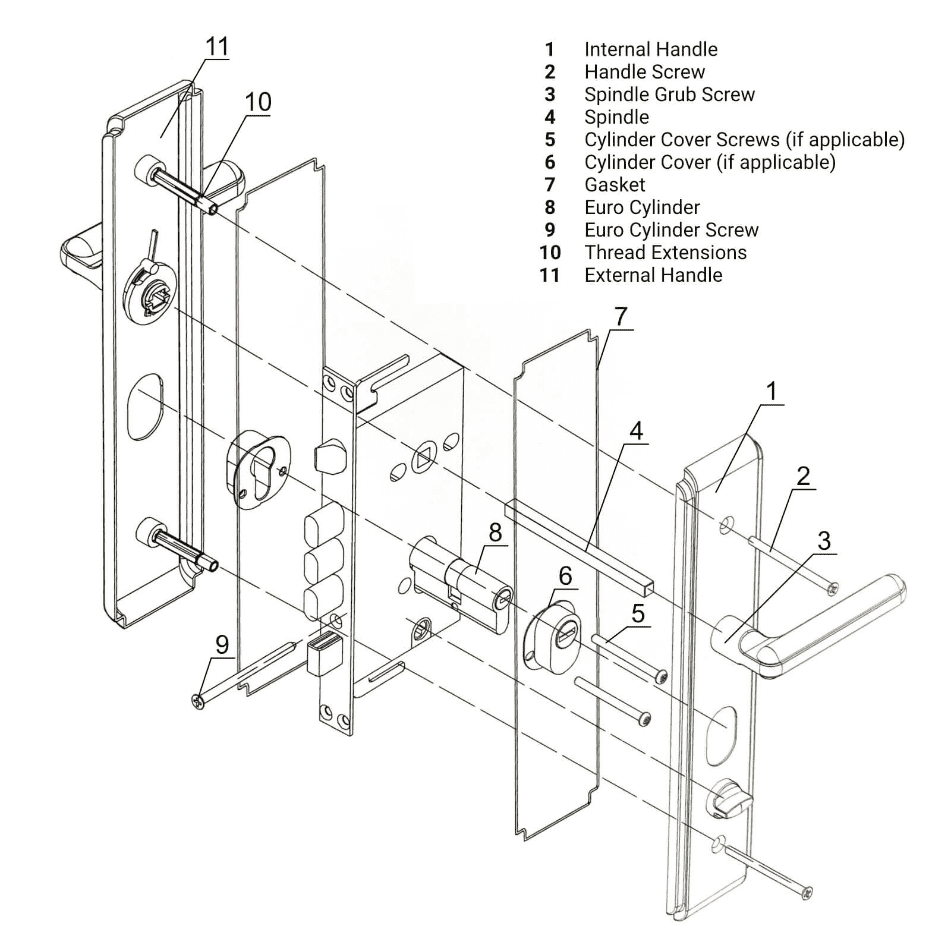
Our plate-handle series is popular in South America, Eastern Europe, and Africa.
Key Features
- Strong and stable structure
- Backplate covers existing holes — perfect for refurbishment
- Often used with tubular locksor mortise locks
- More space for decorative design
Where It Works Best
- Renovation projects
- Traditional-style homes
- Door manufacturers who prefer simplified installation
- Budget-driven markets
A Quick Guide to Plate Handles: Hole Spacing, Colors, and Hole Types
Plate handles—also called panel handles—remain a classic choice in residential and commercial door hardware. Their integrated plate design offers stability, easy installation, and strong visual presence. Below is a simple breakdown of the three factors most buyers evaluate when choosing plate handles: hole spacing, colors, and hole types.
2.1 Hole Spacing: Flexible Options for Different Markets
One of the biggest advantages of plate handles is the wide range of hole spacing options.
The most common spacing varies by region:
- 85 mm– Popular in Europe; used with Euro-profile cylinders.
- 72 mm– Widely used for interior locks and tubular latch systems.
- 60–70 mm– Common in Asia and South America for mechanical lock bodies.
- Backplate lengthscan also differ, allowing suppliers to meet specific door factory standards.
Correct hole spacing reduces installation errors and ensures smooth alignment with the mechanical lock body, improving door performance and reducing customer complaints.

2.2 Materials: Choosing the Right Plate and Lever Materials
2.2.1. Plate Material: The Base That Defines Stability
The plate is the structure that connects the lock, the lever, and the door.
Its material directly affects installation stability and long-term strength.
Stainless Steel Plates
Strong, corrosion-resistant, and ideal for high-traffic commercial doors.
They maintain shape well and provide a clean, modern look.
Zinc Alloy Plates
More decorative and design-friendly.
Perfect for markets that value aesthetics and a wide range of finishes.
Iron / Steel Plates
Cost-effective and sturdy.
Suitable for economical product lines or rental projects where budget matters more than design.
Aluminum Plates
Lightweight and easy to install.
A good choice for interior doors or mass-market housing projects
2.2.2. Lever (Handle) Material: The Part Users Touch Every Day
The lever determines the tactile feel and perceived quality of the handle.
Different materials deliver different comfort, durability, and design effects.
Stainless Steel Levers
Excellent durability and resistance to wear.
Provide a solid, premium feel and are ideal for public buildings or heavy-use areas.
Zinc Alloy Levers
Highly flexible for creative shapes, curved designs, or slim silhouettes.
Allows finishes like matte black, satin nickel, PVD gold, and gunmetal grey.
Aluminum Levers
Light, smooth, and cost-effective.
Often used in residential interior projects.
Wood or Mixed Material Levers (Optional Trend)
Some markets prefer wood, acrylic, or leather elements for a soft-touch, decorative effect.
Popular in boutique hotels or designer homes.
2.2.3. Final Thoughts
A strong plate combined with a comfortable lever creates a durable and attractive door handle.
By mixing materials—such as an iron plate with an aluminum lever or an iron plate with a zinc alloy lever—manufacturers can balance cost, appearance, and performance for different market needs.
2.3 Colors: Timeless or Modern — Both Work
Plate handles offer large visual coverage, so the finish heavily influences the final look of the door.
Popular color choices include:
- Satin Nickel– A universal, safe finish for mass-market projects.
- Chrome– Shiny, clean, ideal for bathrooms and commercial use.
- Matte Black– Modern, strong contrast for minimalist interiors.
- Gold / PVD Gold– Luxurious and scratch-resistant for premium projects.
- Antique Bronze / Antique Copper– Perfect for vintage or classic door designs.
With modern coating technologies like PVD, plate handles now keep their color longer, even in humid environments.

2.4 Hole Types: Matching Any Locking Function
The plate design allows multiple hole types, making it suitable for nearly every door function in a building.
Common hole types include:
- Keyhole– For traditional mechanical keys.
- Cylinder Hole– Used with Euro cylinders; standard in many global markets.
- Knob– Ideal for bathrooms.
- Blank Plate– For passage doors that do not require locking.
This flexibility allows one series of plate handles to cover entrance, bathroom, bedroom, and passage doors—a major advantage for door factories and hardware distributors.

2.5 Conclusion
Plate handles deliver a strong combination of wide hole spacing options, versatile colors, and multiple hole types—making them ideal for large residential projects, hotel doors, and commercial building upgrades. Their stability and visual presence create a reliable, cohesive hardware solution that can match almost any lock body or interior style.
4. Split Handle vs. Plate Handle: Head-to-Head Comparison
A. Aesthetics
Split handles look modern.
Plate handles look classic.
Architectural trend reports show modern minimalism remains dominant
(Reference: Architecture & Interior Trends 2024 – https://www.archdaily.com).
Winner: Split handle (for modern projects).
Winner: Plate handle (for traditional designs).
B. Installation
Split handles require precise alignment with the mortise lock.
But professional installers prefer them for flexibility.
Plate handles save time.
The long plate hides imperfections and speeds up door-assembly lines
(A major factor for door factories scaling production).
Winner: Plate handle.
C. Durability
Durability often depends on:
- Lever mechanism
- Spring strength
- Material quality
- Compatibility with the mechanical lock
- Use frequency
When paired with high-quality mechanical mortise locks, split handles often deliver long-term stability.
(See general durability guidelines: EN 1906 Handle Performance Standard – https://standards.iteh.ai/catalog/standards/cen/)
Plate handles, however, offer better stability for low-budget lock systems.
Winner: Depends on the lock system used.
D. Security
Security is primarily determined by the lock, not the handle.
But handle structure matters for resistance to bending or forced entry.
Split handles pair well with multi-point locks and heavy-duty mortise locks.
Plate handles offer a larger area for anti-tamper titanium plates.
Winner: Split handle for high-security projects.
E. Market Preference by Region
Below is what I observe from years of supplying door hardware globally:
Region | Preference | Reason |
Brazil | Plate handle | Compatible with common tubular locks |
Mexico | Plate handle | Style preference + low installation cost |
Middle East | Split handle | Works with mortise locks & modern designs |
Europe | Split handle | EN standard compliance |
Africa | Plate handle | Easy renovation + covers old holes |
Southeast Asia | Mixed | Depends on door type & budget |
5. Don’t Forget the Supporting Hardware
When choosing handles, always consider the entire door-hardware system.
I recommend evaluating:
- Mechanical door locks(mortise or tubular)
- Door hinges(ball bearing, butt hinges)
- Door closers(for commercial projects)
- Door viewers (cat eyes)for entrance doors
- Strike plates, latch type, spindle durability
A mismatched system reduces performance.
Many importers solve this by buying complete matching sets from us for consistency.
6. Which One Should YOU Choose? (Simple Decision Guide)
Choose a SPLIT HANDLE if you want:
- Modern design
- Higher durability
- Premium feel
- Compatibility with high-quality mechanical mortise locks
- Targeting mid-to-high-end markets
Choose a PLATE HANDLE if you want:
- Faster installation
- Better coverage for old door holes
- Budget-friendly pricing
- Traditional aesthetics
- Easier mass production for door factories
7. Conclusion: Which Handle Truly Wins?

There is no single winner.
The choice between split handles and plate handles depends on your project needs, market positioning, and customer expectations.
If your priority is design flexibility, premium aesthetics, or matching high-end door sets, split handles take the lead. Their range of materials, colors, and styles makes them ideal for modern residential and commercial projects. When paired with our UMAY mechanical mortise locks, they deliver a smooth, long-lasting experience.
If you focus on easy installation, cost efficiency, or large-scale project standardization, plate handles might be your best solution. Their adjustable PZ centers, multiple hole types, and broad color options make them perfect for door factories and distributors who need consistent supply across multiple product lines.
Both categories can achieve security, durability, and long lifecycle performance—especially when combined with high-quality UMAY hinges, door closers, viewers, and door locks.
At the end of the day, the “best choice” is the one that fits your client’s door system, your production process, and your business strategy.
If you’re still unsure, I’m here to help.
With over 20 years in global door hardware sales, I can recommend the most suitable handle and lock combination for your application—whether it’s residential towers, hotel projects, regional branding, or retail expansion.
Share This Story, Choose Your Platform!